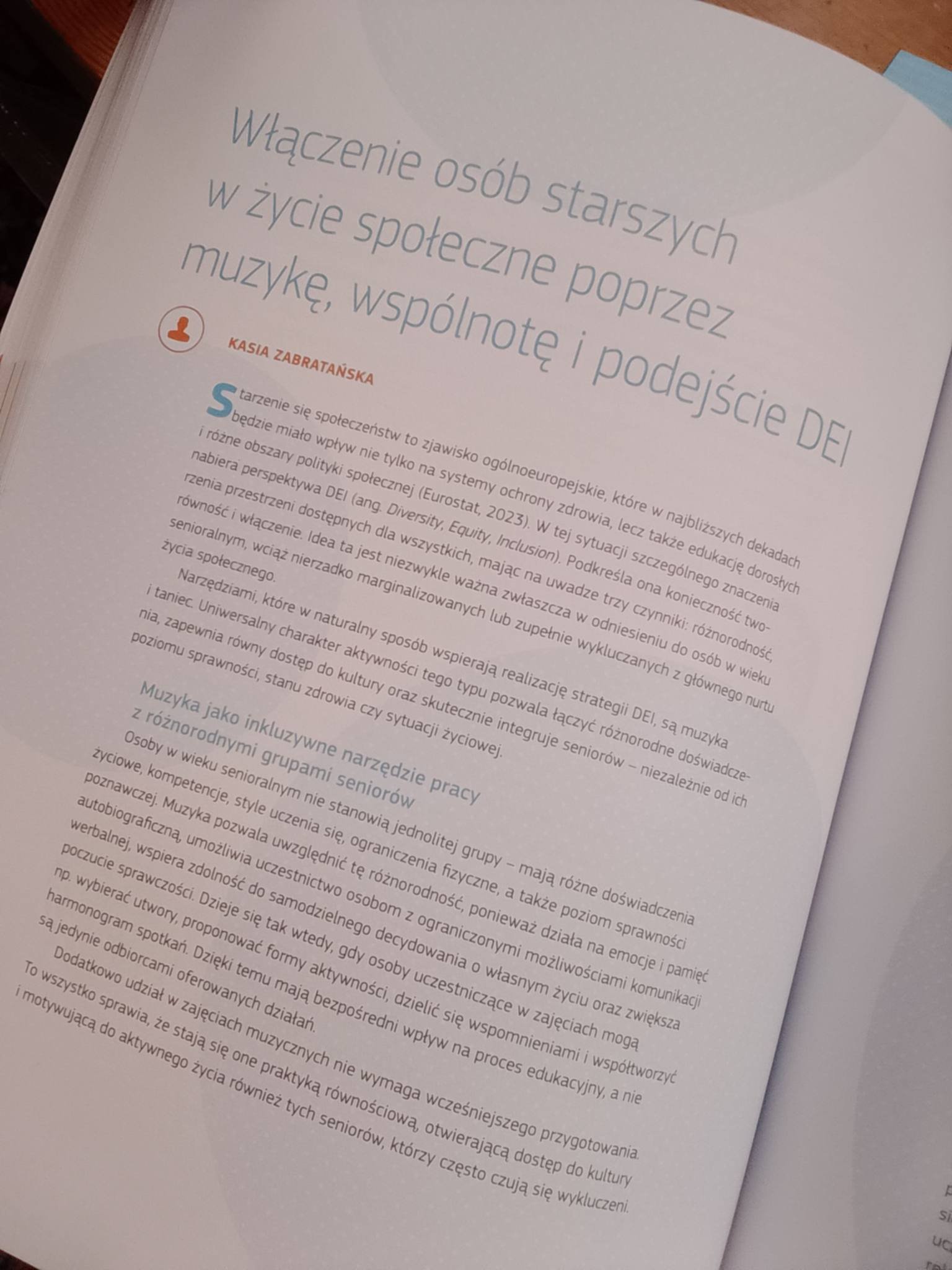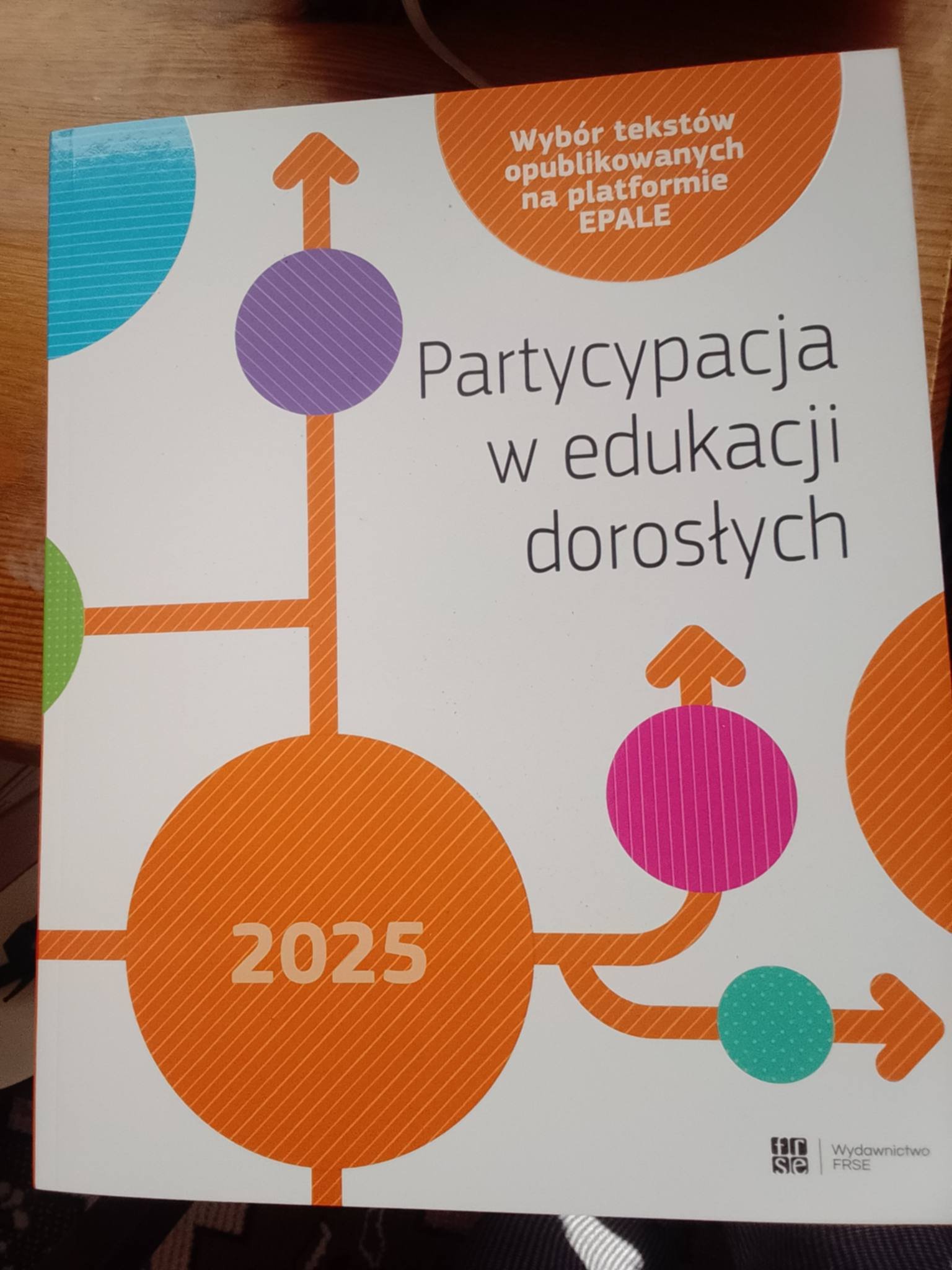

We are delighted to share the news that an article by Dr Kasia Zabratańska, a representative of our Foundation, entitled “Including Older People in Social Life Through Music, Communities, and a DEI Approach”, has been included in the publication “Participation in Adult Education: 20 Articles Published in 2025”, prepared as part of the European EPALE platform.
This is an important distinction and a source of pride for us. The article has attracted attention and recognition, and the interest it received from the platform’s readers shows that the issues it addresses matter to people working in adult education, social inclusion, and older people’s participation in society.
Music, Community, and Inclusion – How Can We Support Active Ageing?
Dr Kasia Zabratańska’s article explores how older people can be included in social life through music, community-building, and a DEI approach – diversity, equity, and inclusion. It presents ageing not only in terms of challenges, but also in terms of opportunities, relationships, and active participation in society.
In the article, the author highlights several important areas:
Music as an inclusive tool for working with diverse groups of older people – making it possible to engage people with different needs, experiences, and abilities.
Rhythm and movement – as elements of activities that support well-being and are important from the perspective of neurodegenerative disease prevention.
Community and inclusion – as foundations of healthy ageing, preventing isolation, and building social bonds.
International exchange of experience – using the example of Poland and Portugal to show how different contexts can share common goals related to diversity, equity, and inclusion in education for older adults.
Particularly valuable is the combination of music-and-movement activities with a DEI perspective, which is still often overlooked or reduced to slogans when it comes to older people. This approach allows us to see music not merely as a form of activity, but also as a tool for building agency, relationships, and participation in social life.
In a comment on the EPALE platform, Nina Woderska wrote:
“A very important and much-needed article. Particularly valuable is the clear connection between music-and-movement activities and a DEI perspective, which is still often overlooked or reduced to slogans in the context of older people. Presenting music as a tool for equality, agency, and genuine neurodegenerative disease prevention is extremely convincing.”
We are pleased that the article has received such a positive response and provided an opportunity to highlight the importance of accessible, engaging, and relationship-based activities for older people.
The article is available online here (in Polish): Including Older People in Social Life Through Music, Community, and a DEI Approach – read the article on EPALE
EPALE – A Space for Sharing Knowledge and Experience
EPALE, the Electronic Platform for Adult Learning in Europe, is a place where people involved in adult education can find inspiration, keep up with current developments, and discover new approaches to their work.
The platform’s community includes educators, trainers, career advisers, and researchers, among others. It is a space for practitioners who want to develop their skills, share experiences, and discuss their day-to-day professional work.
EPALE supports the exchange of knowledge and the bringing together of different perspectives, allowing good practices to inspire other people and organisations.
In 2025, the platform celebrated its tenth anniversary. This made it an especially good opportunity to reflect on the achievements of its community and revisit articles addressing important issues related to lifelong learning.
Participation in Adult Education – From Reflection to Action
The publication “Participation in Adult Education: 20 Articles Published in 2025” draws attention to issues of particular importance in today’s world: a sense of agency, trust, integration, community, openness to change, and continuous development.
The articles collected in the publication encourage reflection on participation, dialogue, and lifelong learning. Their authors show how everyday activities, conversations, caring for one’s surroundings, and shared initiatives strengthen people’s sense of agency, build trust, and foster responsibility for their local communities. They also emphasise that participation is one of the most important drivers of learning and adult skills development.
This publication is intended for people who want to use education, community development, and cultural work to change themselves and their surroundings, while also building bridges between theory and practice. It also includes an article reflecting on EPALE’s first decade.
As Professor Dorota Gierszewska, PhD, DSc, from Jagiellonian University, the publication’s academic editor, writes in the introduction:
“Participation in adult education shines a light on the areas that matter most to people today: a sense of agency, trust, integration, community, openness to change, and continuous development. I hope this publication will inspire action, the implementation of individual initiatives, and the search for meaning in education and social life. This book was created with every adult in mind who wants to participate consciously in the learning process, build relationships, and have a real influence on the world around them. It is an invitation to conversations and activities that can lead to lasting changes in both personal and social life.”
We Encourage You to Read!
We are proud that Dr Kasia Zabratańska’s article has been included among the texts selected from materials published on the EPALE platform in 2025. For us, this is not only a distinction, but also confirmation that it is worth addressing issues related to older people’s participation, inclusion, music, and community-building.
We encourage you to read Dr Kasia Zabratańska’s article and the entire publication, “Participation in Adult Education: 20 Articles Published in 2025”.
May this reading inspire new initiatives, the development of good practices, and the creation of spaces where everyone – regardless of age or ability – can feel part of a community and have a real influence on the world around them.